
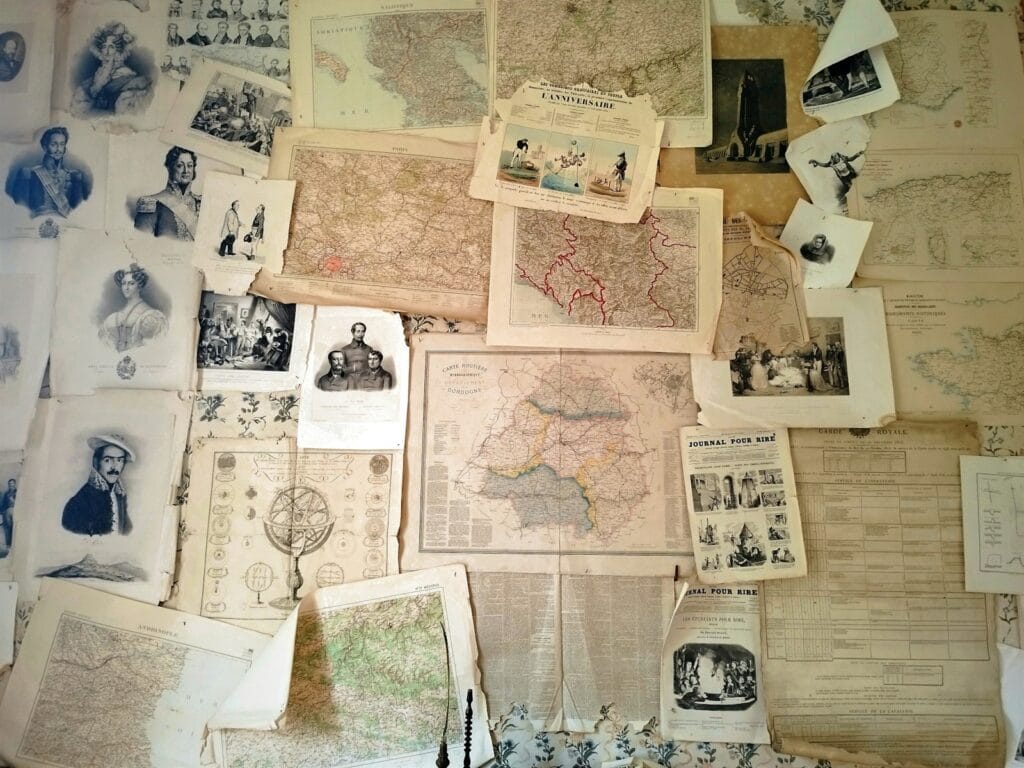
Your ancestor was born in Lorraine, but the records say “Germany”? You are not alone. Between 1871 and 1918, the Moselle department was part of the German Empire. For nearly fifty years, births, marriages and deaths were recorded under German administration — and that is often where family research from abroad gets stuck.
I am Stéphanie Perrin, a professional genealogist based near Metz, in Moselle. I work every week with these records, in the original registers of the Moselle Departmental Archives (AD57). Here is what you need to know — and how I can help.
Contents
ToggleWhy Moselle records are different
- 1871–1918: German administration. After the Franco-Prussian War, Moselle became part of the Reichsland Elsass-Lothringen. Civil registers continued, but were gradually kept in German, often in old German handwriting (Kurrent) on printed German forms.
- 1918: back to France. Records return to French — so a single family can appear in French, then German, then French again, sometimes with different spellings of the same name.
- 1940–1944: annexed again. During the Second World War, Moselle was annexed de facto by Nazi Germany. Many families were expelled in 1940, and from 1942 young men were forcibly conscripted into the German army.
- Towns with two names. Thionville was Diedenhofen, Sarreguemines Saargemünd, Boulay Bolchen, Sarrebourg Saarburg, Bitche Bitsch. American or Australian papers may use either name — or just “Germany”.
- Shifting borders. The areas around Sarrebourg and Château-Salins belonged to another department (Meurthe) before 1871, so records for a single village may be split between two archive services.
The records I search for you
- Civil registers (Standesamt) of births, marriages and deaths, and their ten-year indexes.
- Parish registers before 1792, often written in Latin.
- Option declarations of 1872, when people from the annexed territory could choose to keep French nationality — and often had to leave.
- Military records: French registers for the periods under France; for men who served in the German army, communal enrolment lists and German casualty lists from the First World War, where they survive.
- Notarial records: marriage contracts, inventories and estate papers, which often name several generations.
- Records of the 1940 expulsions and of the forcibly conscripted men of 1942–1944.
Many of these records are online; others can only be consulted in the reading room near Metz. That is one of the advantages of working with a genealogist based in Moselle.
An honest word about German handwriting
I am not a German-language specialist. But these registers follow standard formulas, and years of practice have taught me to recognise these formulas and extract what matters: names, dates, places and parents. When an entry is especially hard to read, I tell you clearly what is certain and what is not. Nothing in your file is guessed.
How to start
Send me what you already know: a name, a village (even misspelled), a date, a document from your family papers. Within 2 business days, I reply personally with a free, no-obligation quote. Most clients start with a custom investigation (from €150): one precise question, answered with sources.
→ Tell me about your Lorraine ancestor
Research depends on the records that have survived. I cannot guarantee a result, but I always tell you what the archives can and cannot show.